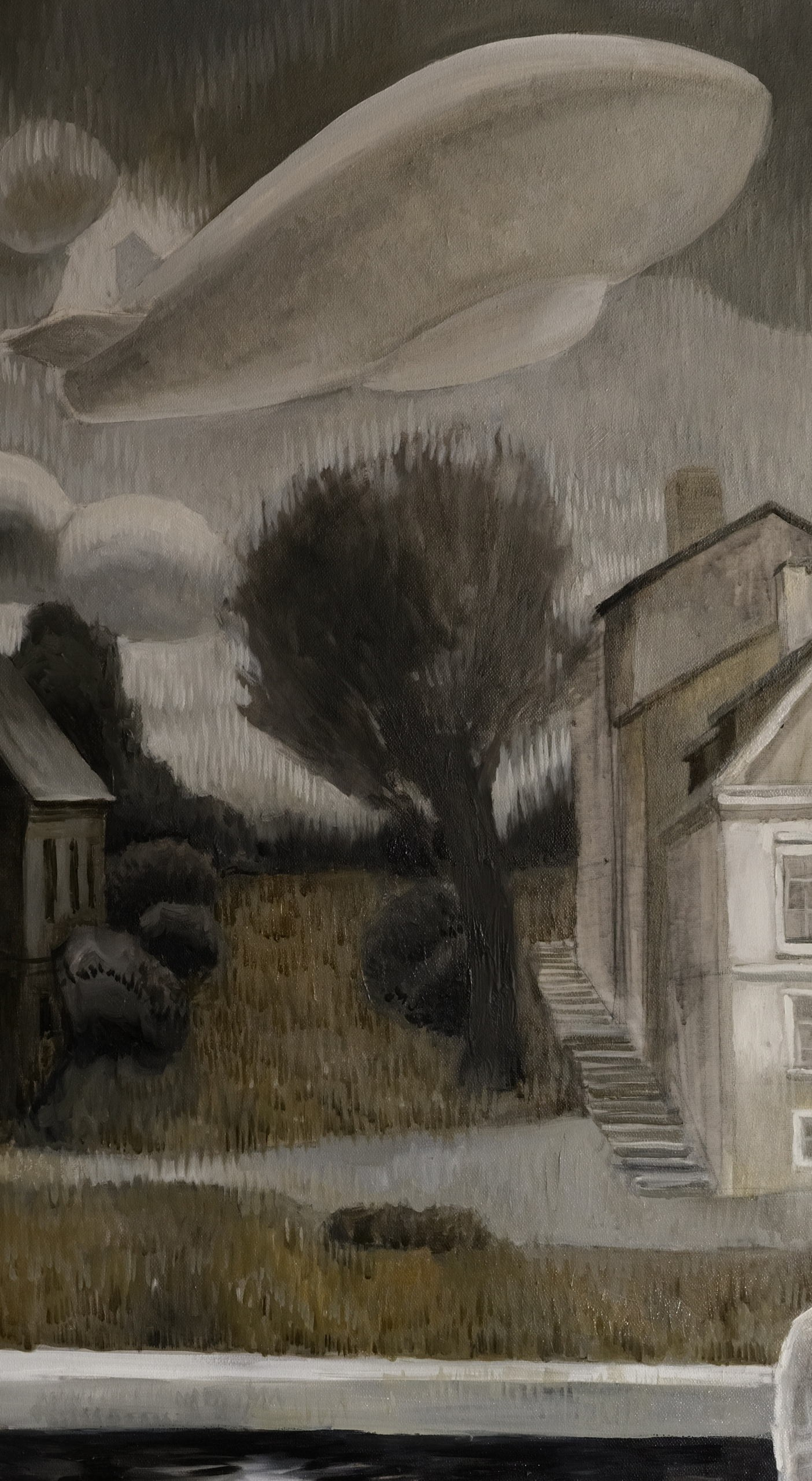
Goal or path
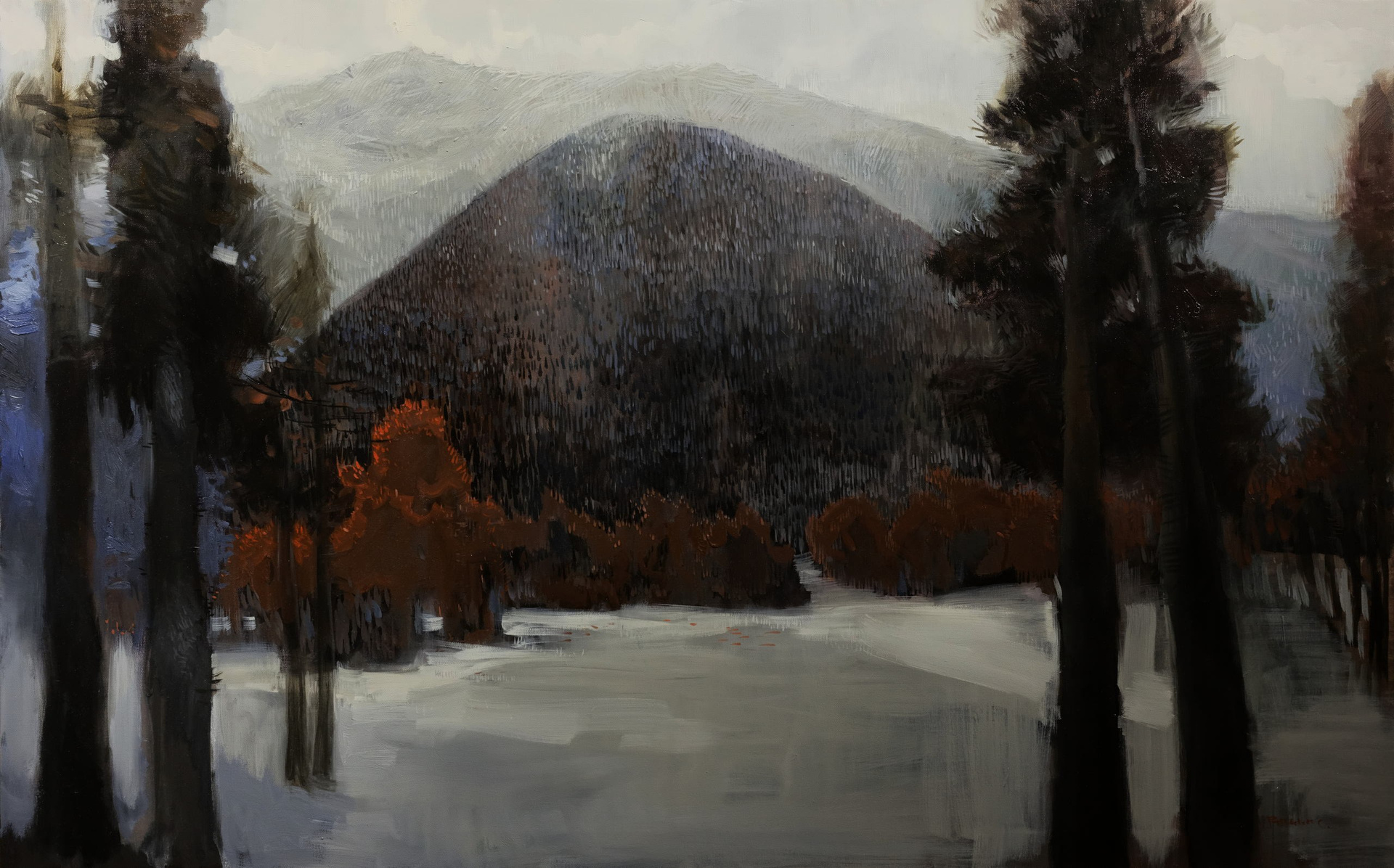
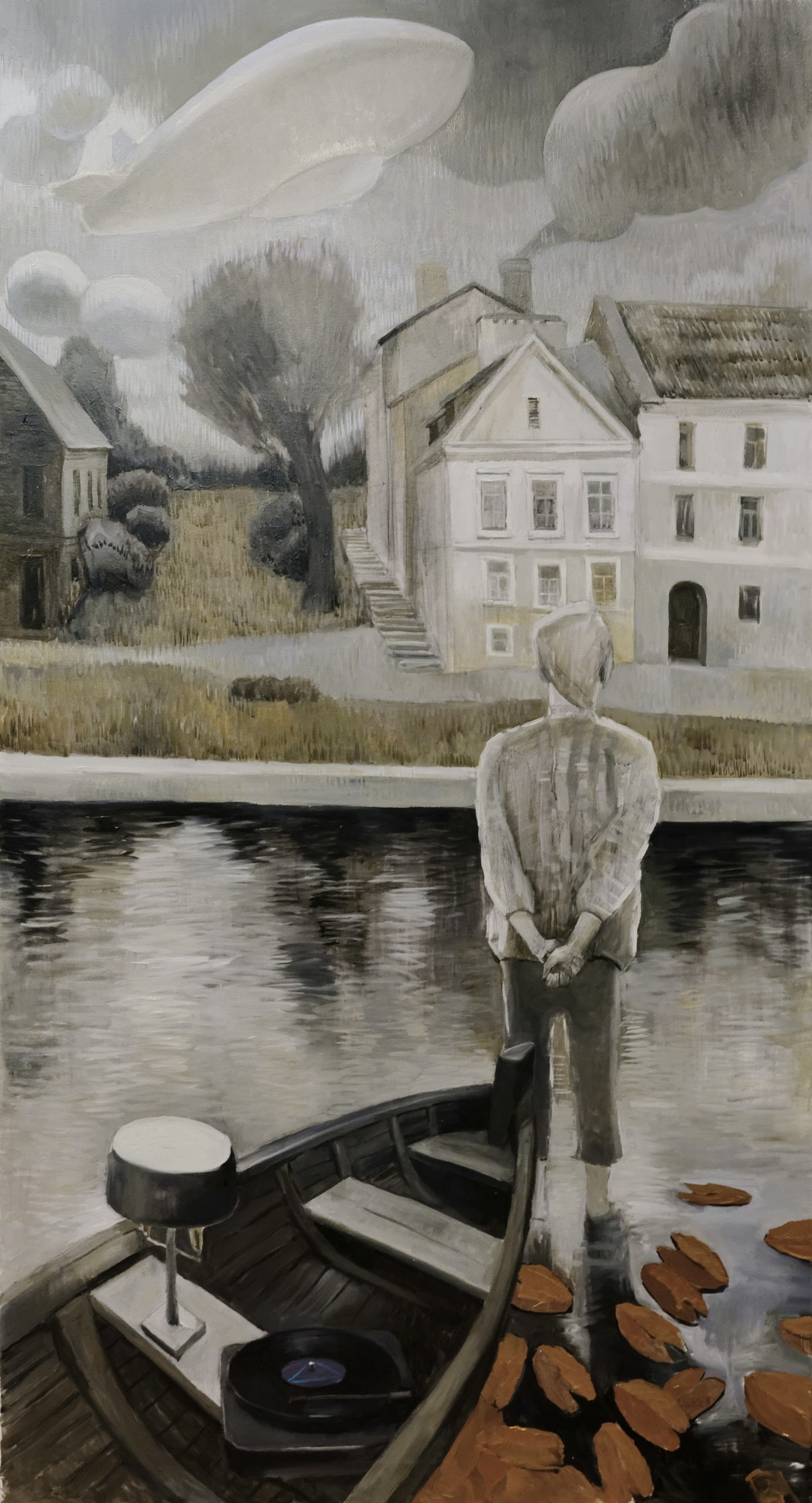
This painting is a surreal landscape that is remarkable for its atmosphere and fits perfectly with the philosophical theme of “goal or path.” Visually, it divides the world into two parts: the world of the observer and the world on the other shore.
In the background, we see neat, yet seemingly frozen and silent houses. The staircase leading upward is a classic symbol of ascent, achievement, and putting in effort to achieve a result.
A huge white airship is sailing in the overcast sky. It is a symbol of a global, perhaps unattainable dream or lofty goal that beckons but is too high and too far away.
The shore looks deserted. Achieving a goal is often a solitary process.
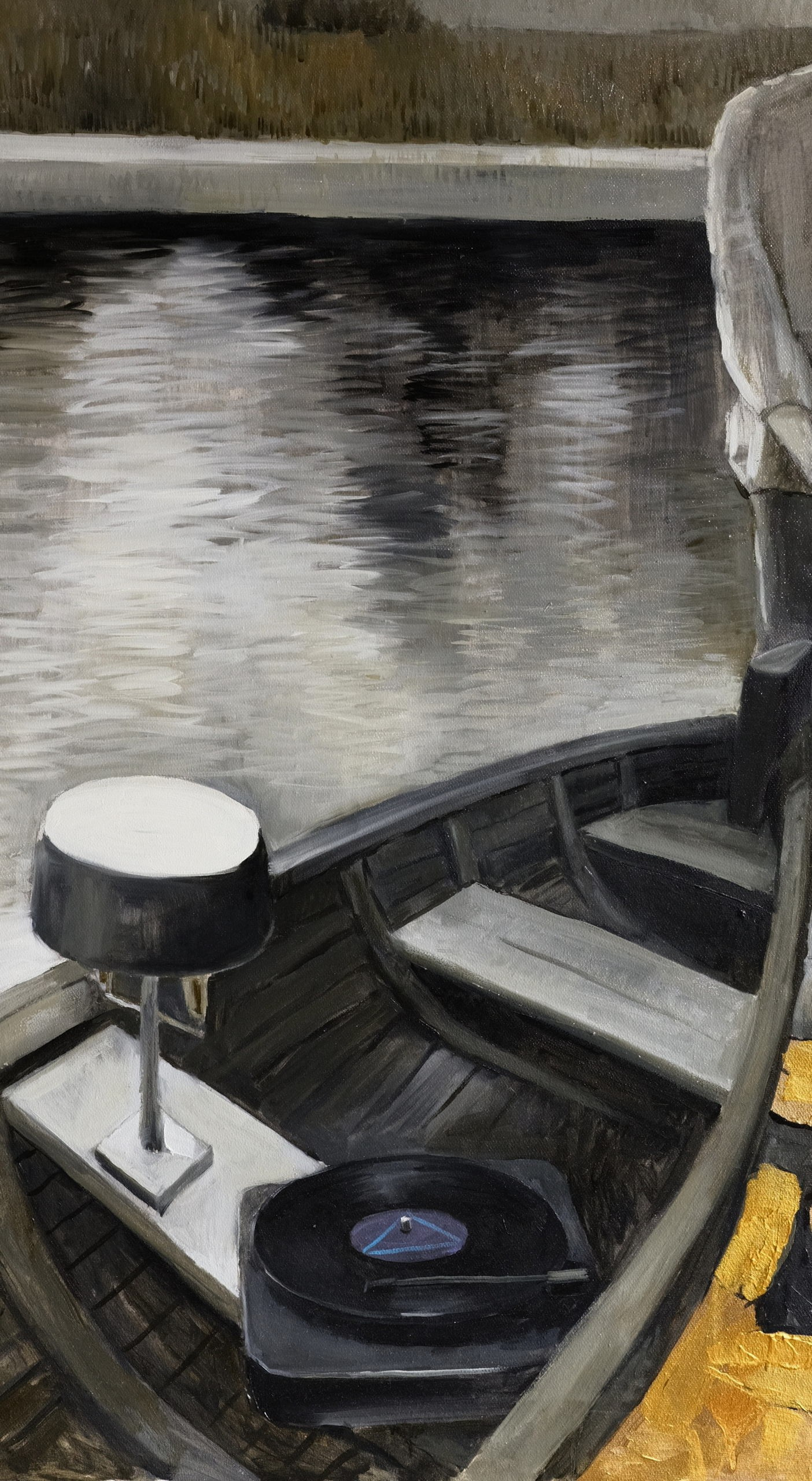
In the foreground, we see a wooden boat. There are no oars in it, but there is a working gramophone with a Pink Floyd record — The Dark Side Of The Moon — and a lamp. This is a metaphor for the journey itself. The gramophone is the “soundtrack” of your life, the ability to enjoy the process, to listen to the music of the moment. The lamp is the light that illuminates your current step.
Water is the flow of life, unconscious, fluid.
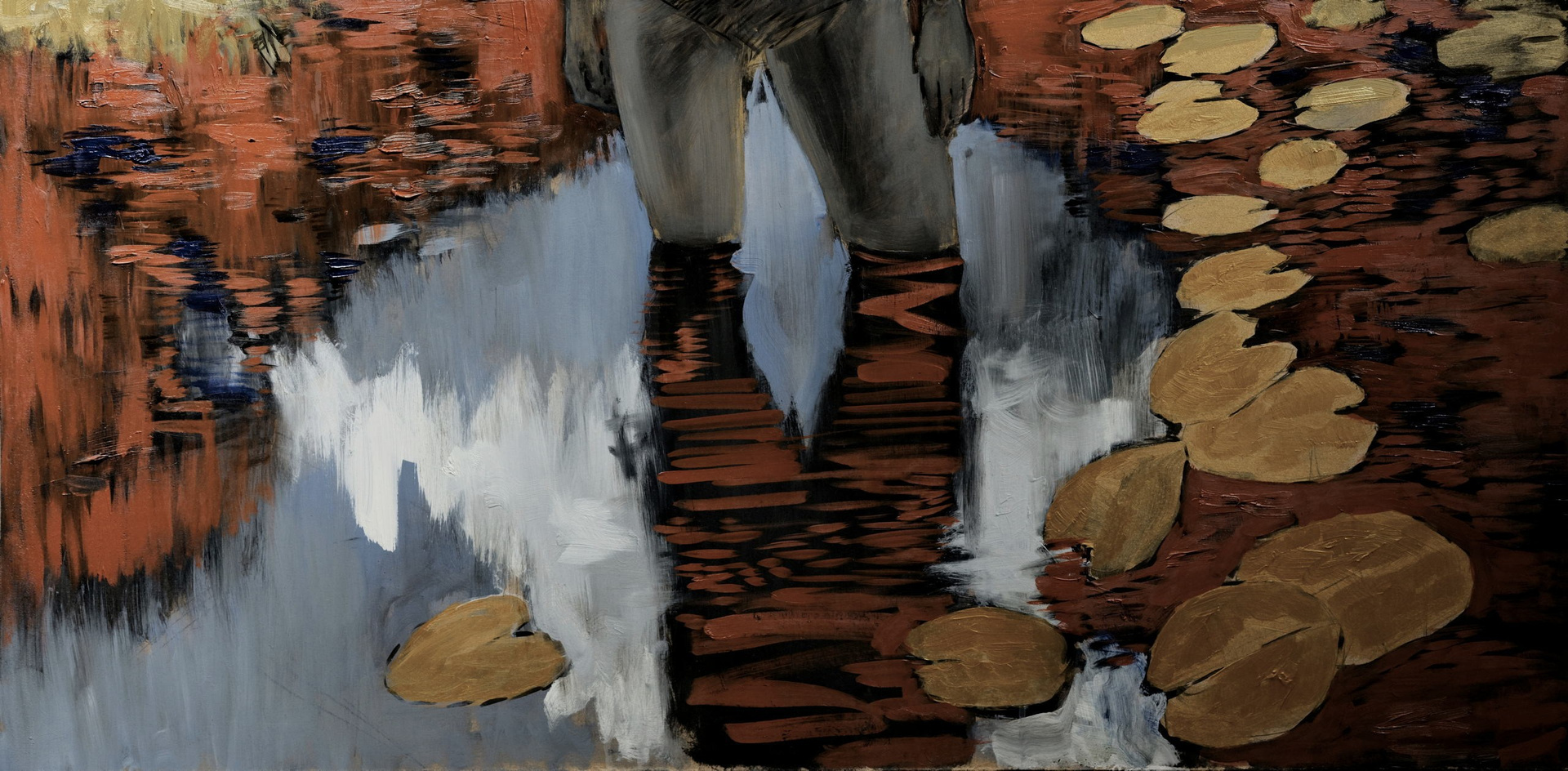
The man is standing right in the water, barefoot, with his hands clasped behind his back. He is not in a boat, but he is not on the shore either. He is frozen in the moment of “here and now”. He is looking straight at the target. But at the same time, he is physically immersed in the water — in the journey.
The painting is done in muted, gray‑brown, pastel tones. There are no bright colors, except perhaps for the reddish leaves and the blue plate. This creates a sense of melancholy, silence, and deep introspection. Time seems to have stopped here.
The painting illustrates the dichotomy of these strategies and the choice that everyone faces. The protagonist of the painting is at a point of equilibrium. He knows where he’s looking, but his feet feel the coolness of the water, and behind him lies a boat with comfort and music. The ideal strategy conveyed by the artist is to move consciously toward your goal, while still dancing to the music of the journey.
85×160 cm, canvas, oil
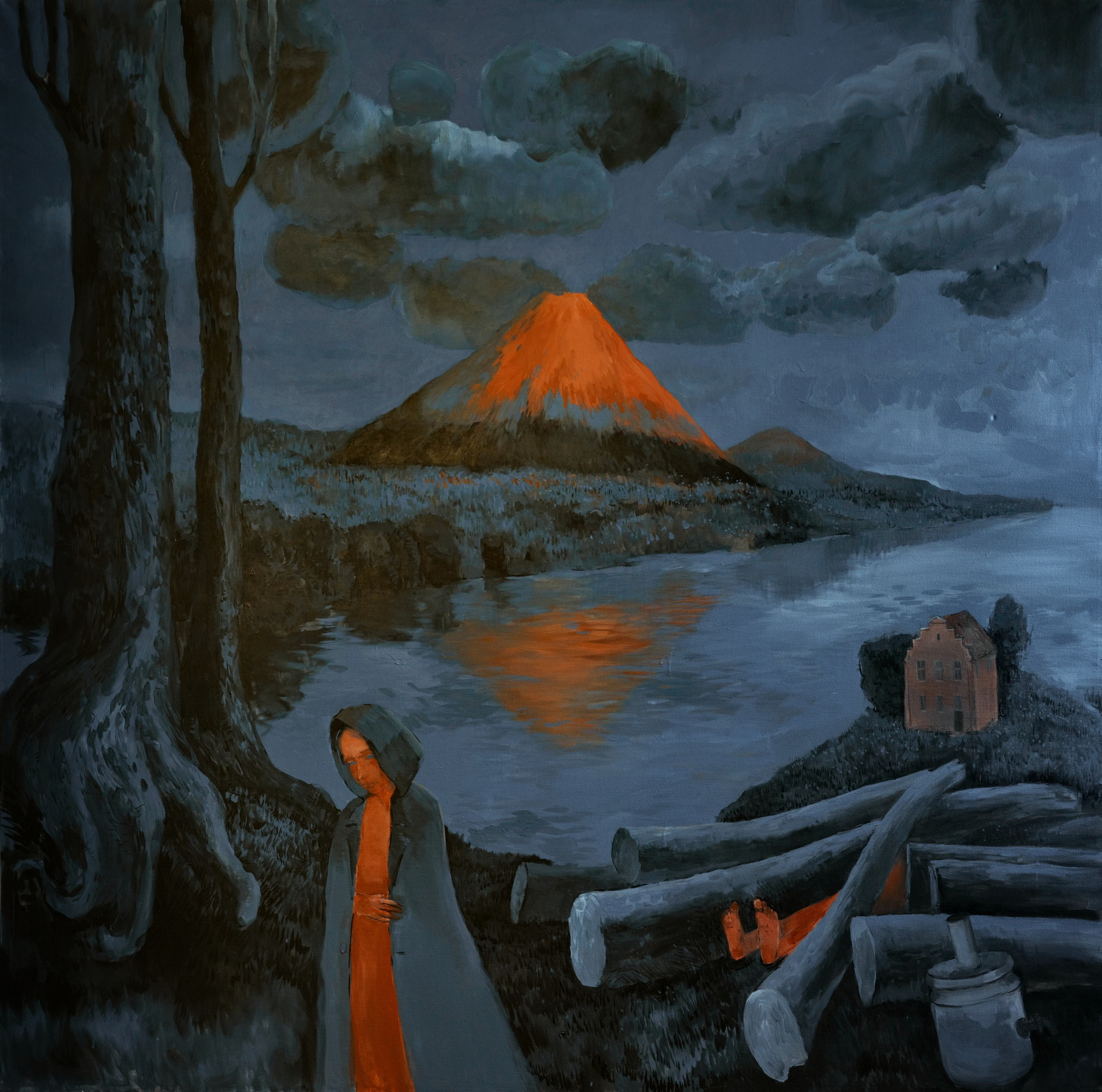
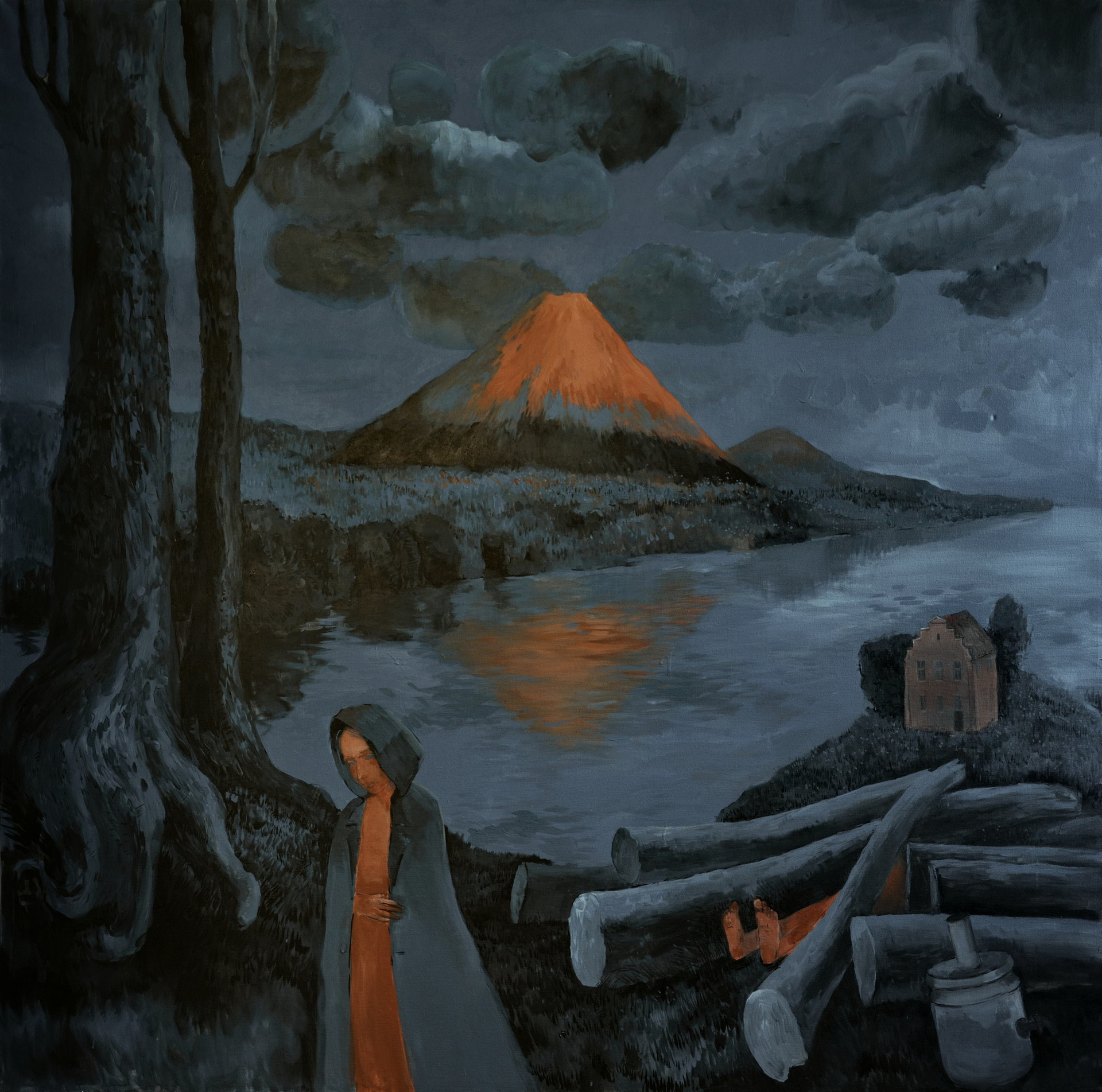
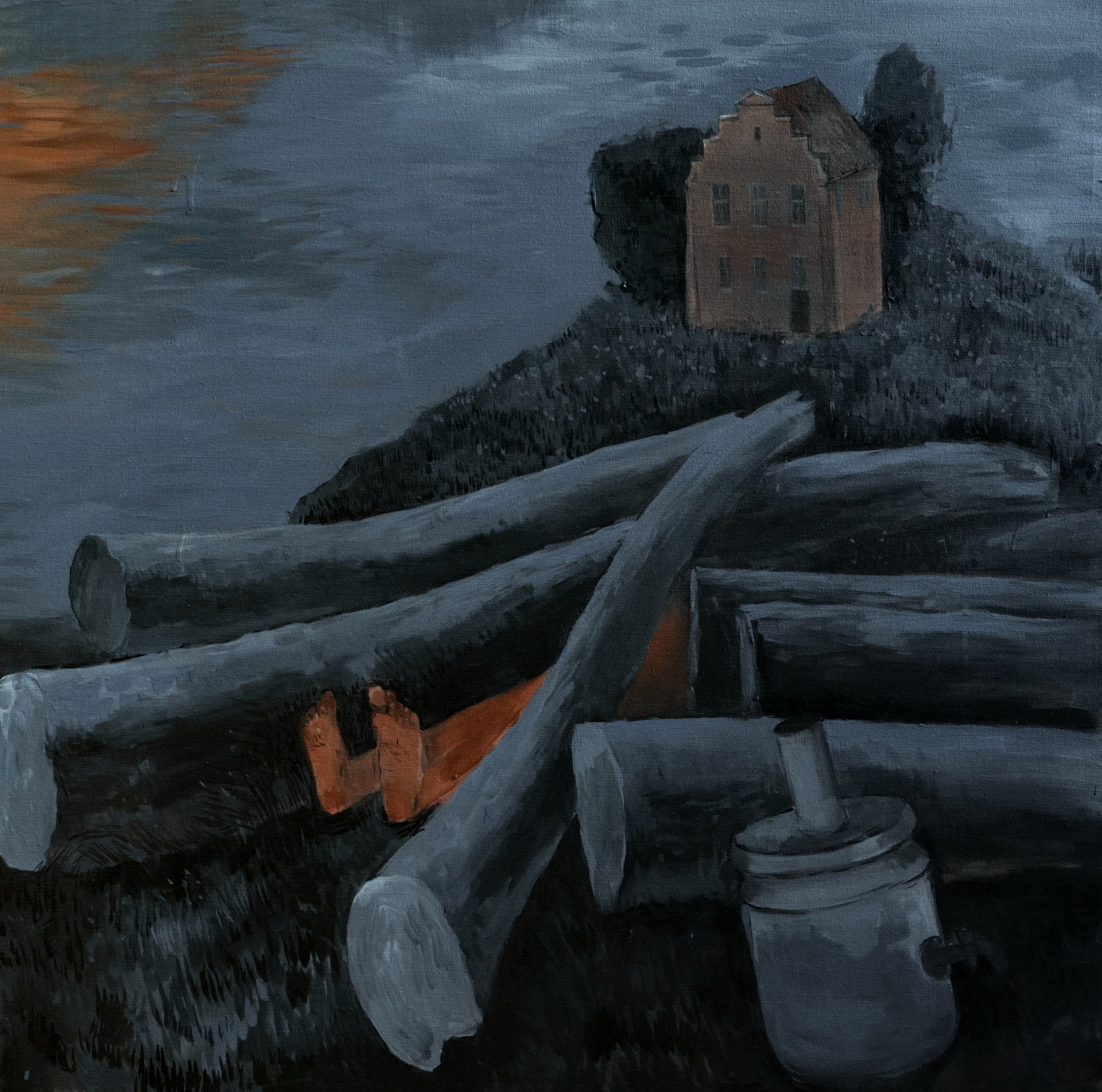
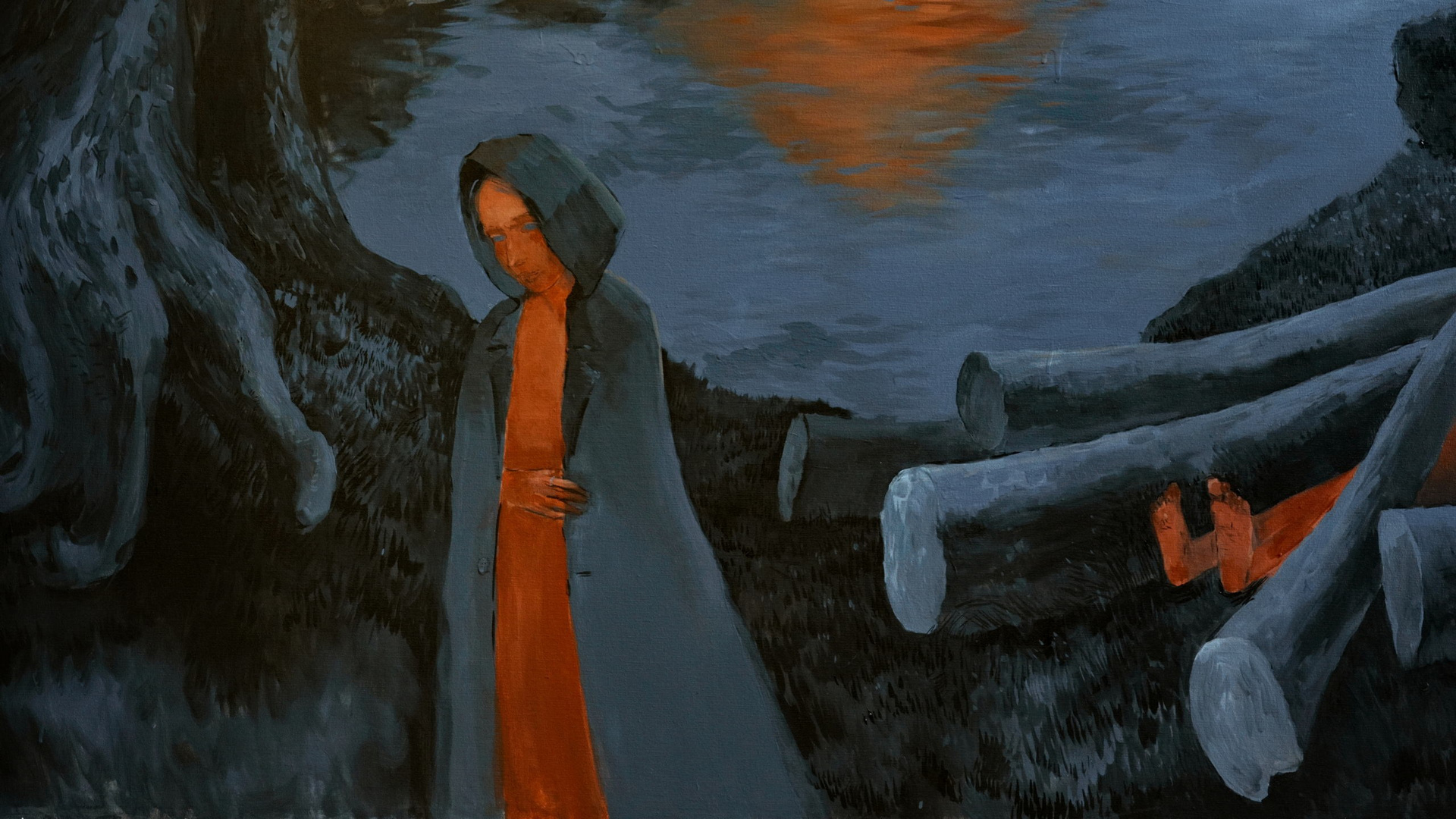
A story in the vicinity of Mount Fuji
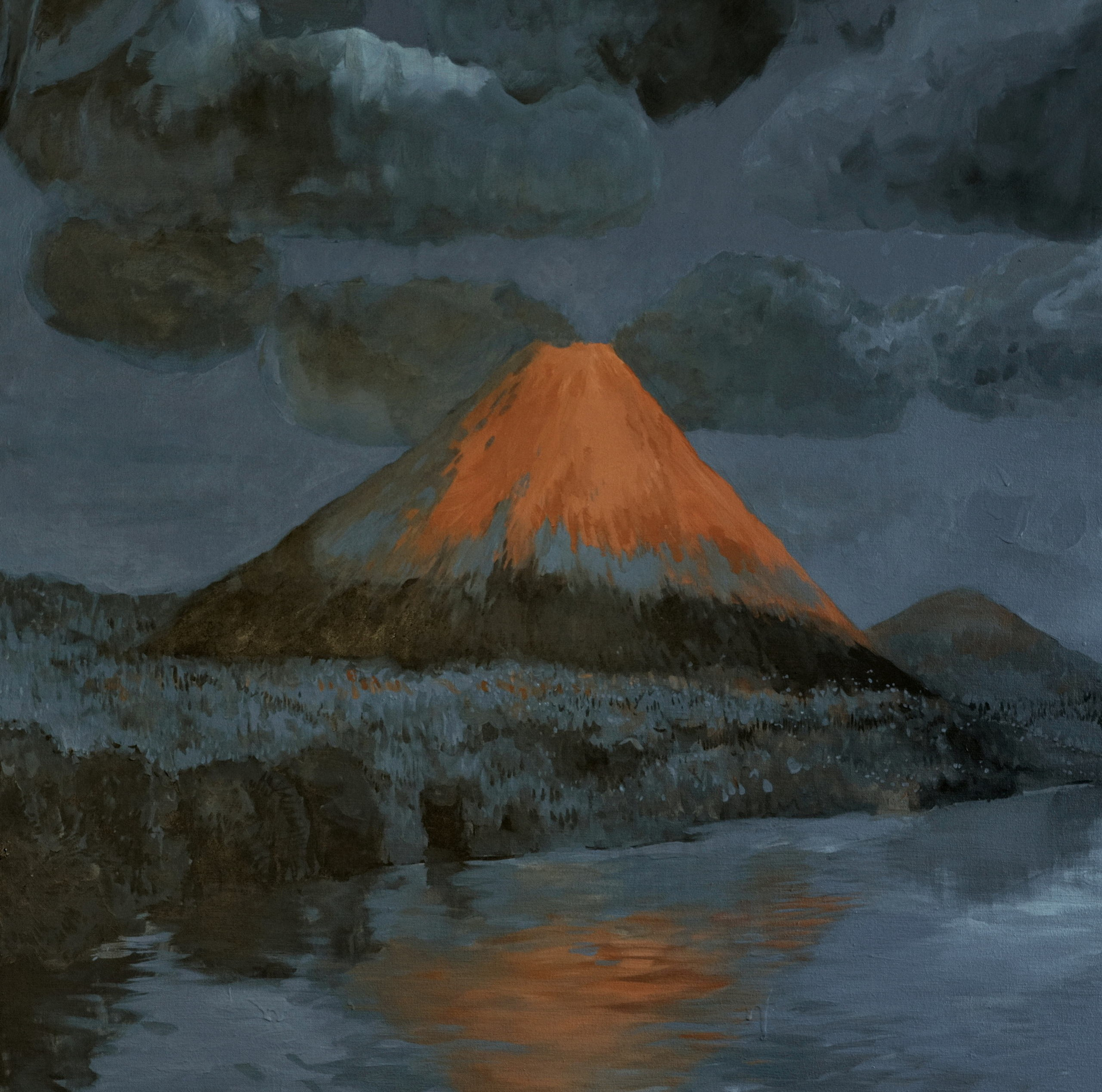
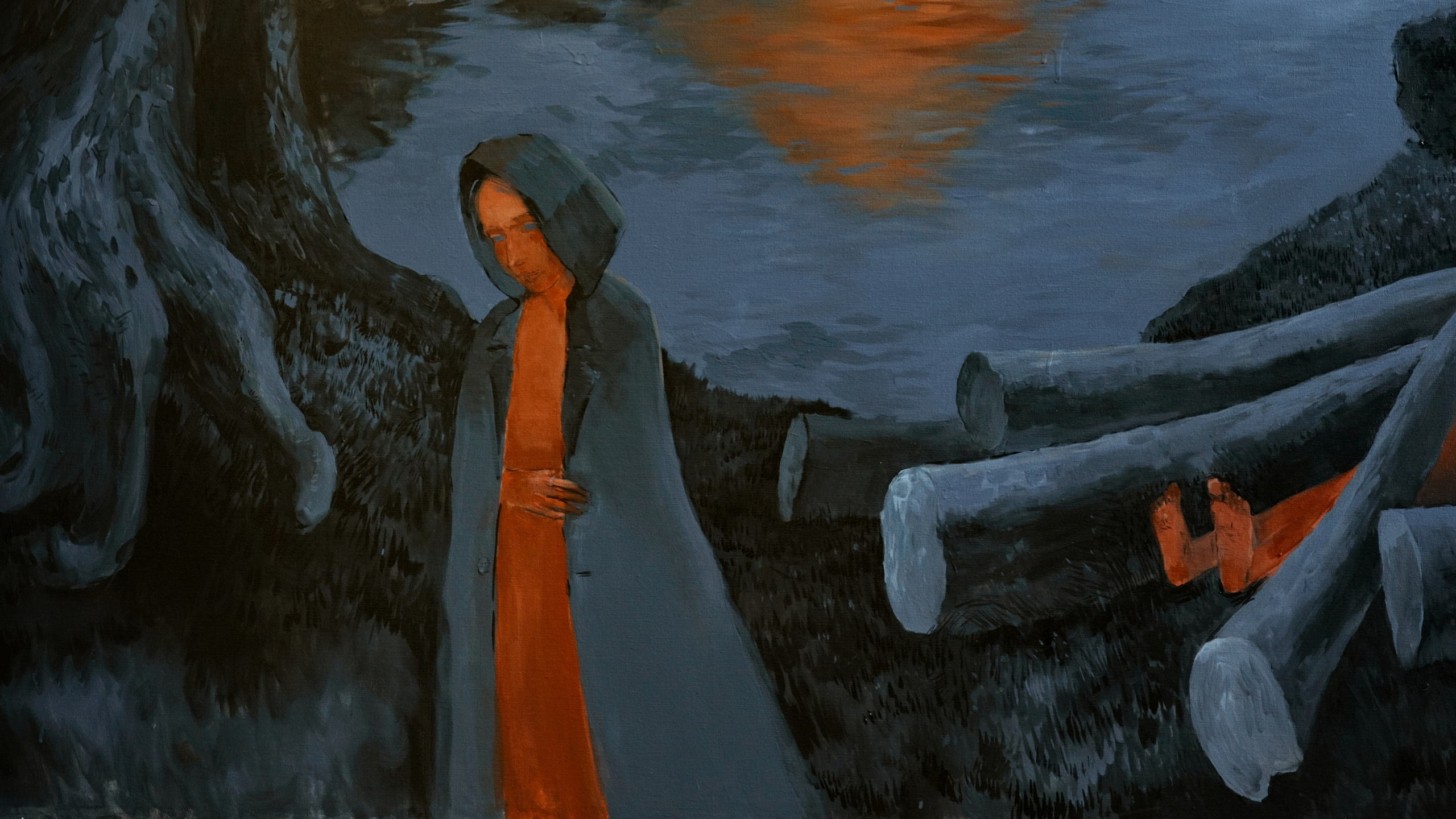
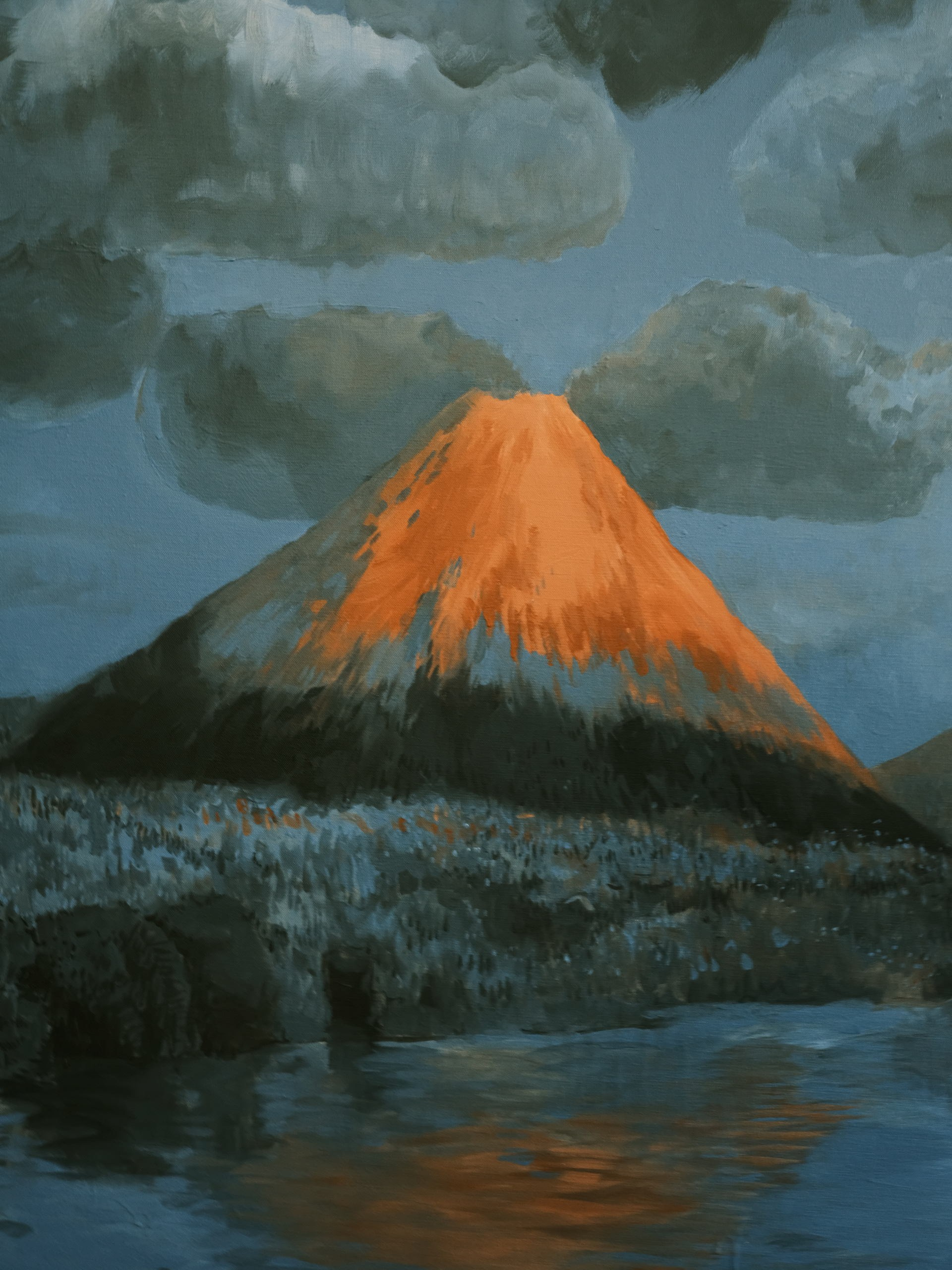
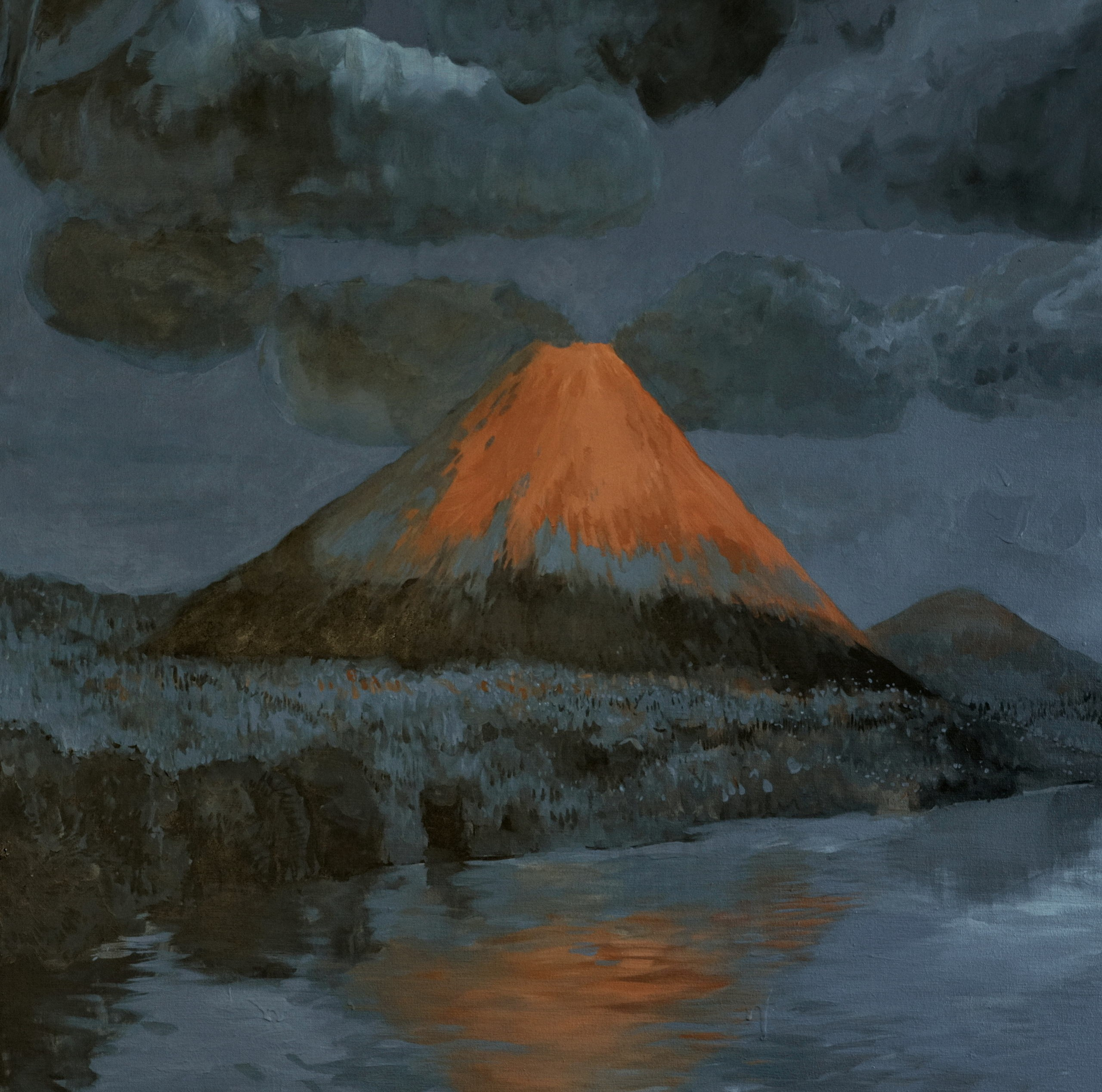
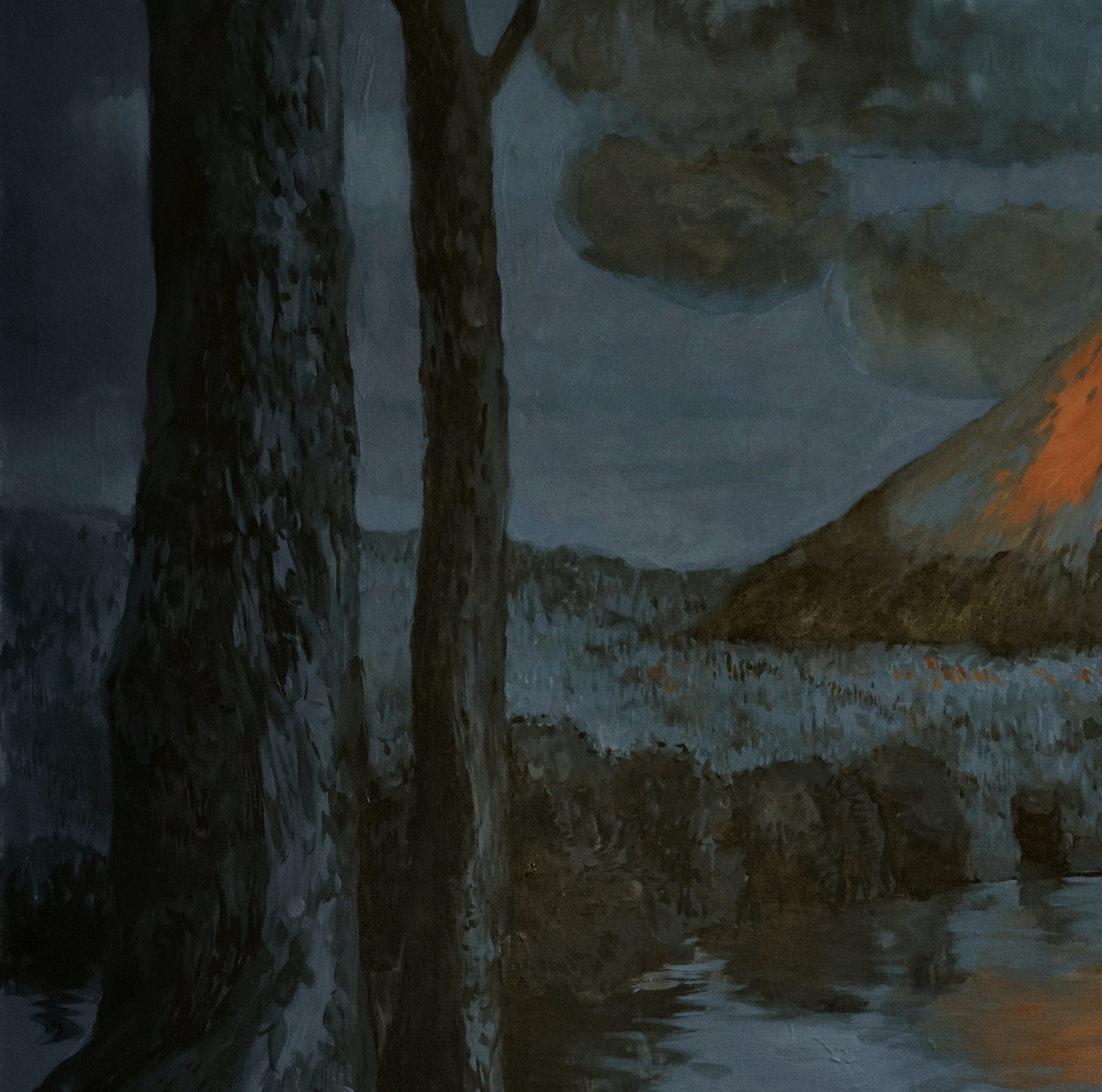
At the center of the composition stands a majestic mountain. Its peak glows with the last rays of the sun breaking through the darkness. This light is reflected in the cold, dark waters. The mountain here is a symbol of absolute, unshakable eternity. It was here before us and will remain after us. The sky is overcast with heavy, leaden clouds, emphasizing the timelessness of this landscape.
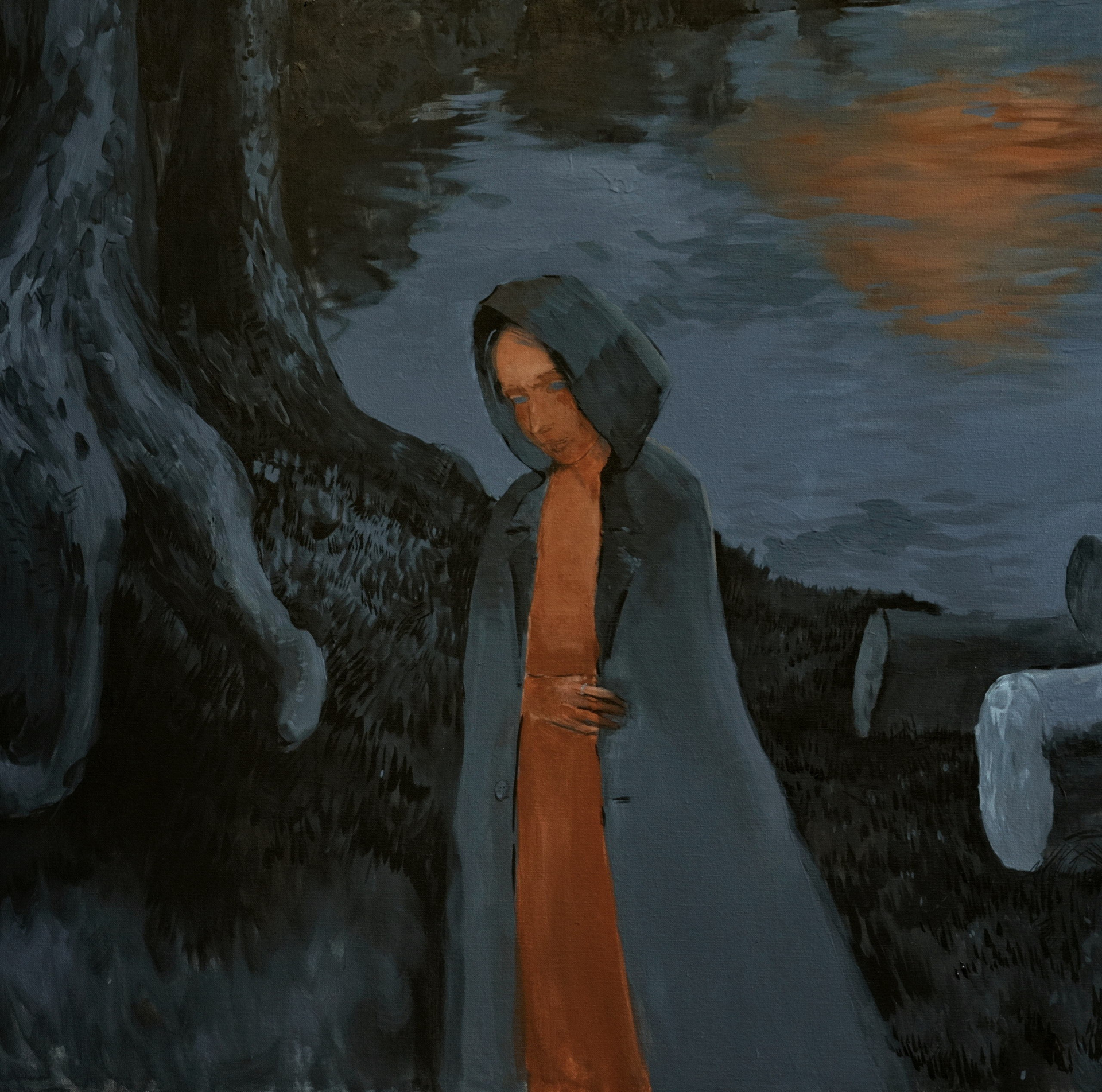
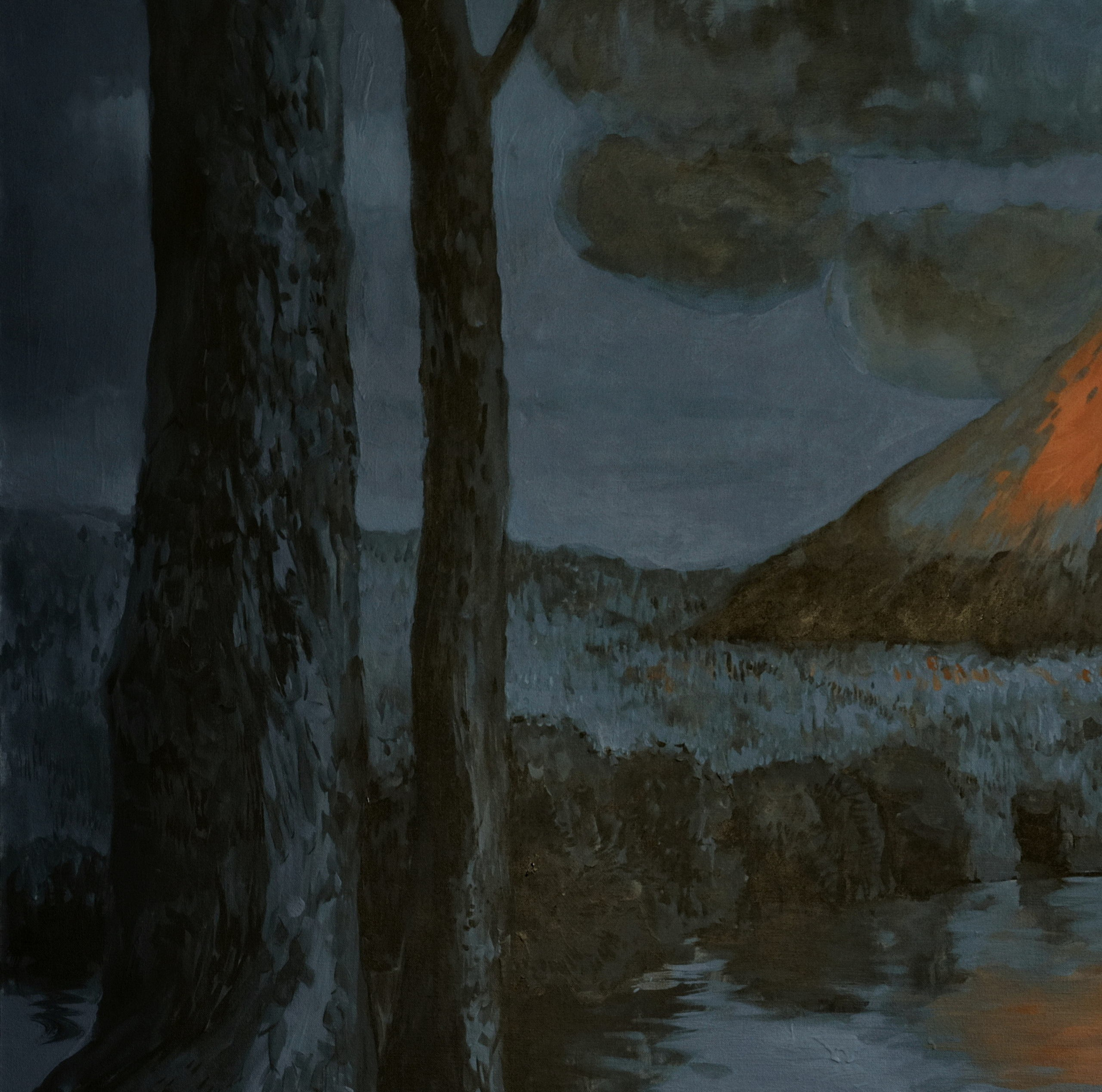
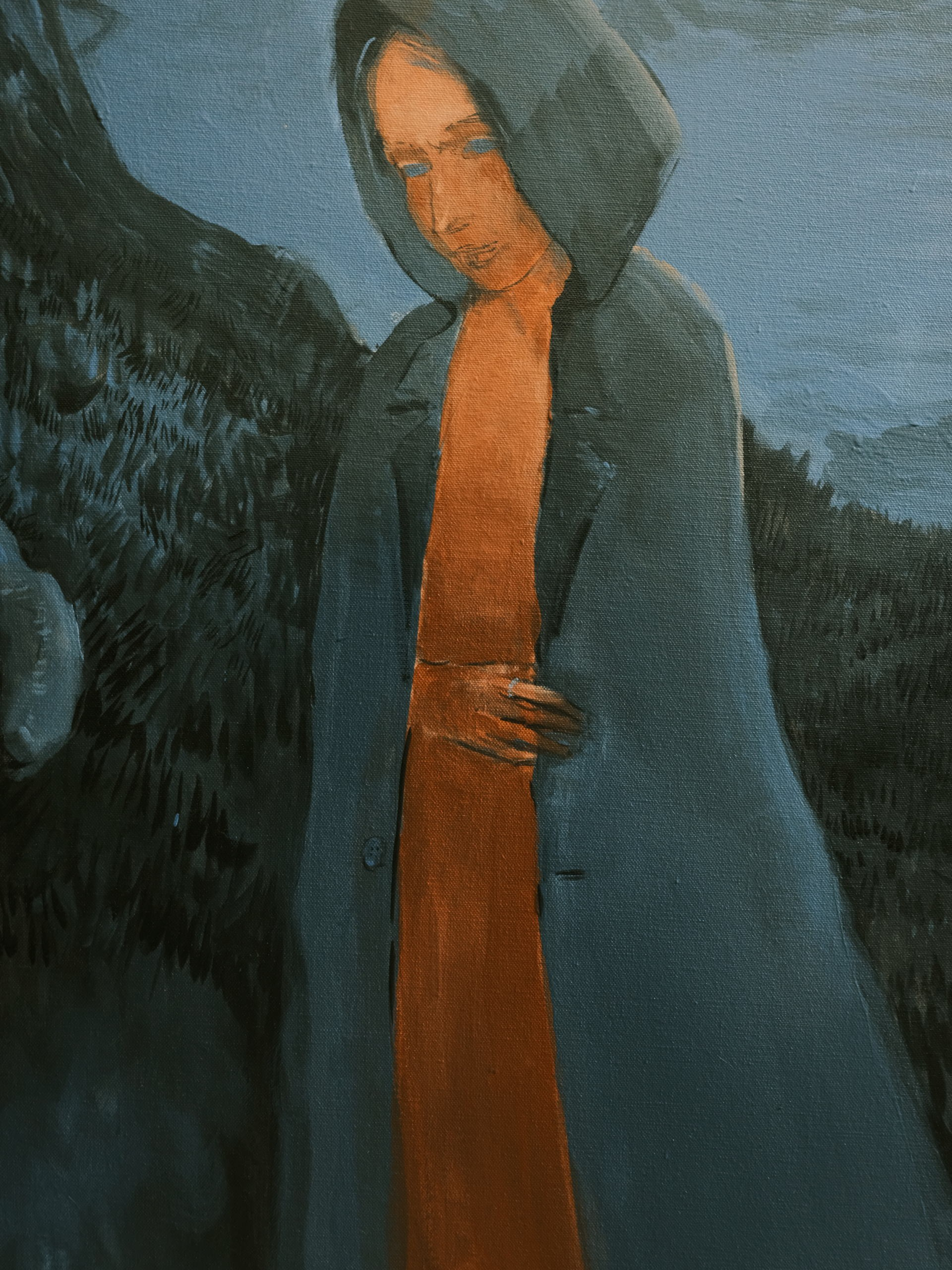
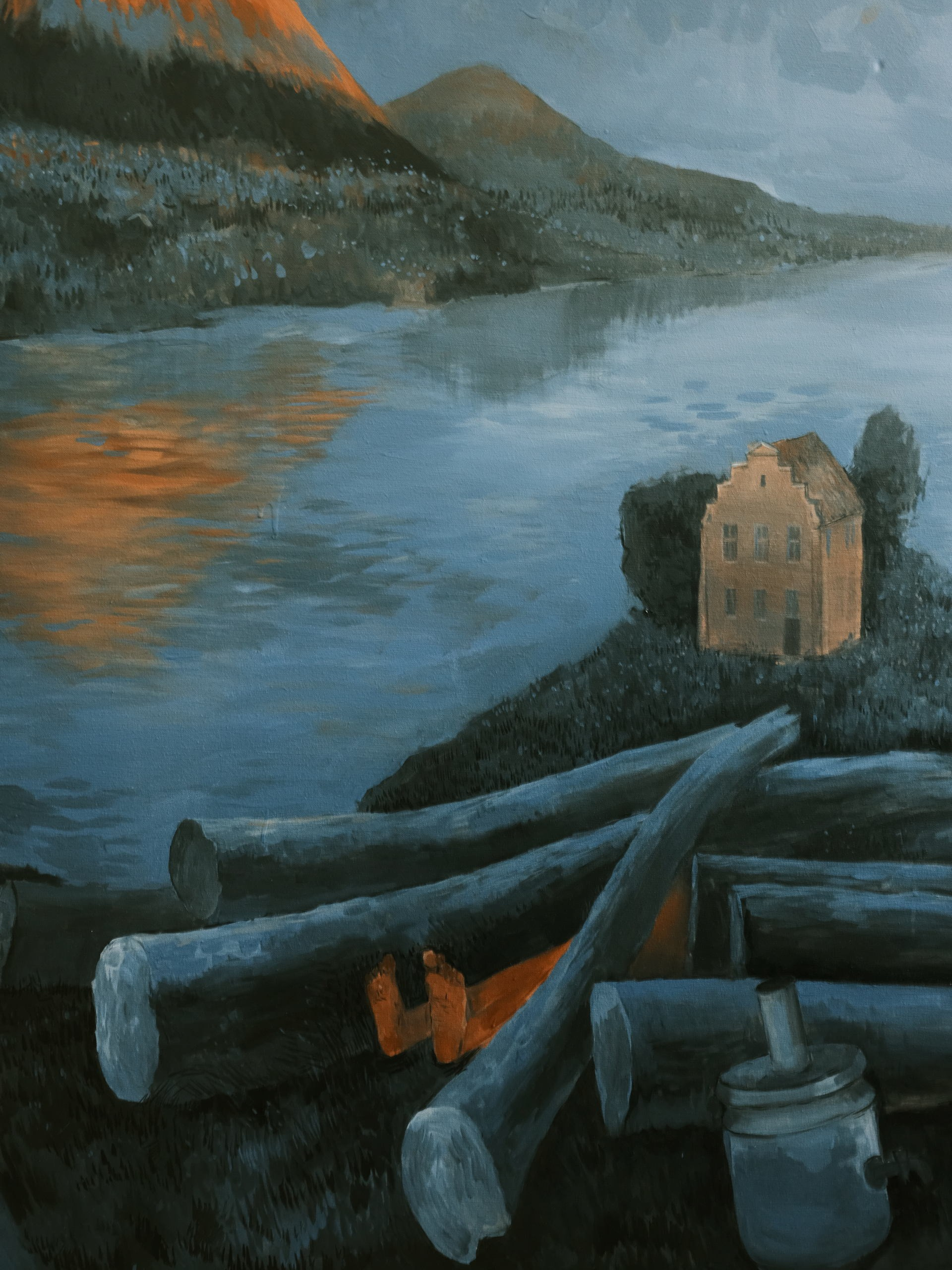
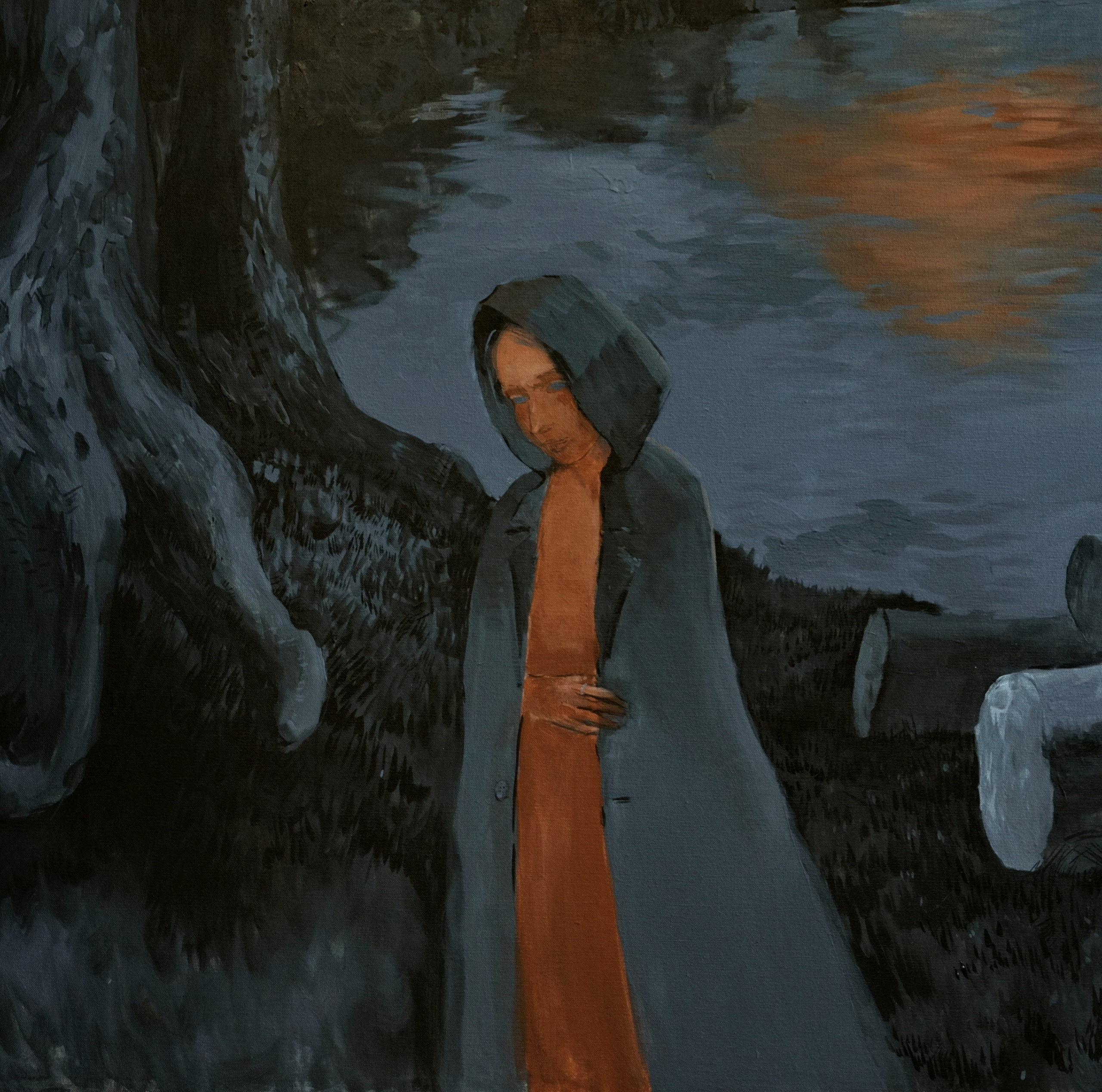
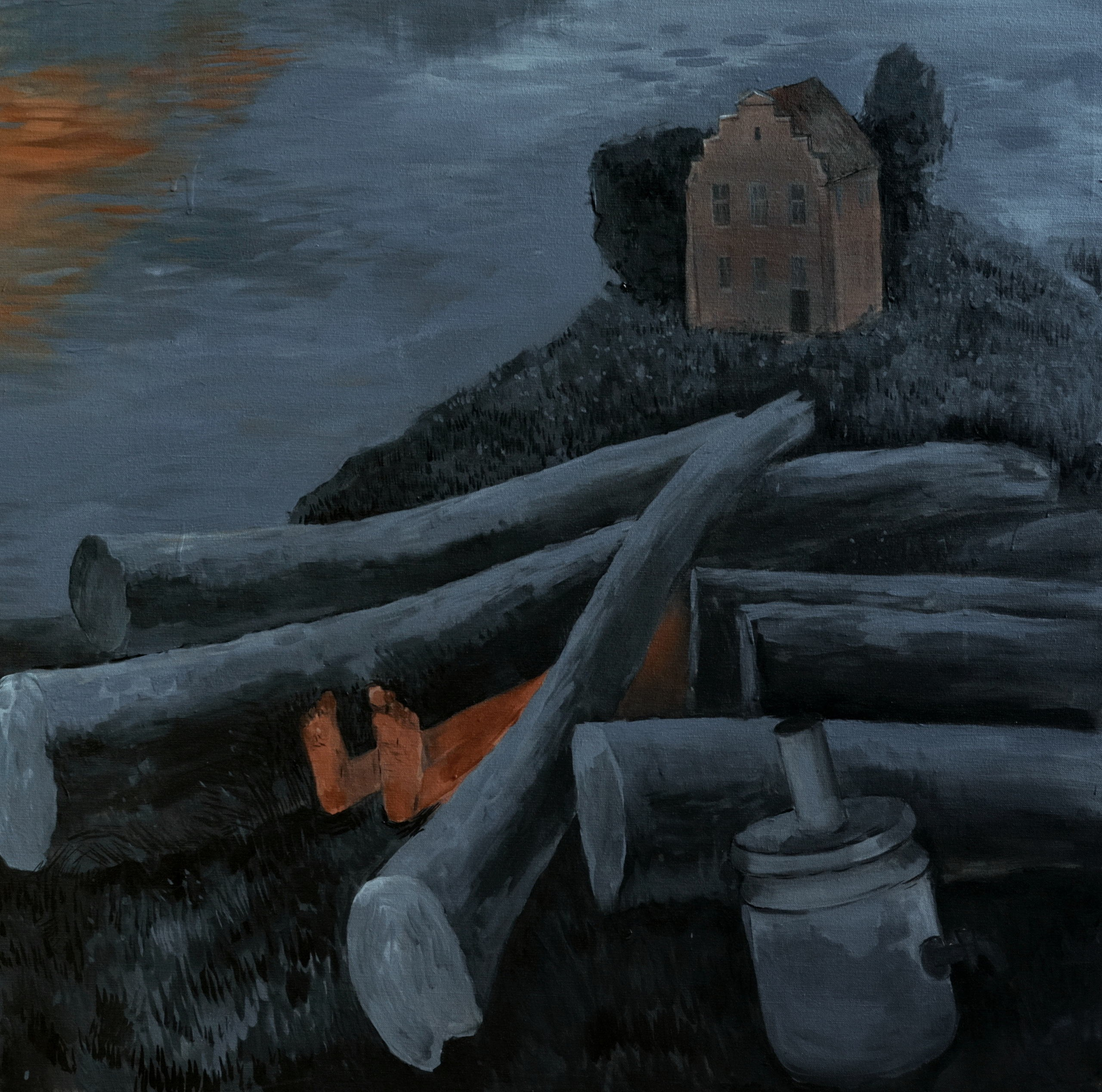
On the other shore, a small house stands alone. This is human life — fragile, lost against the backdrop of grandiose nature, squeezed between water and rocks. In the foreground, at the foot of the huge, dark, and gnarled trees (symbols of antiquity and oblivion), stands a female figure. Her pose is full of sorrow and resignation, her gaze lowered. But the most important thing is her color. She glows with the same bright orange light as the mountaintop. This is a visual metaphor: the love that lives in her heart is as strong and hot as the fire of a volcano, but, unlike a mountain, human life is fleeting.
It’s as if she’s saying goodbye or preserving the memory of something very important that is already fading away.
To the right, in the foreground, lie the fallen trunks of trees. This is a symbol of the end, of a cut‑down life, of a bygone era. But in one of the logs, there’s a gaping void, inside which bright orange embers are still smoldering. These embers are that very love and memory. Years will pass, new trees will grow, and everyone will forget what happened at the foot of the mountain. But right now, at this moment, the fire hidden inside the log is still burning. It’s a memory of love that remains smoldering even when life itself has already been cut down.
The artist uses an incredibly expressive contrast. Cold, gloomy blue and gray tones of night, water, and rocks are contrasted with an aggressive, vibrant orange. This orange color is the color of passion, blood, fire, and love. It brings together the mountain, the woman, and the smoldering embers, showing that love is the only thing capable of withstanding cold and oblivion.
The painting is a quiet elegy. It’s about how human life is just a moment against the backdrop of eternal Mount Fuji, but it is precisely in that moment that all the meaning lies. Love is like the fire in these logs — it will fade, it will be covered by new leaves and snow, but as long as it burns, it warms and gives meaning to this short journey.
200×200 cm, canvas, acrylic
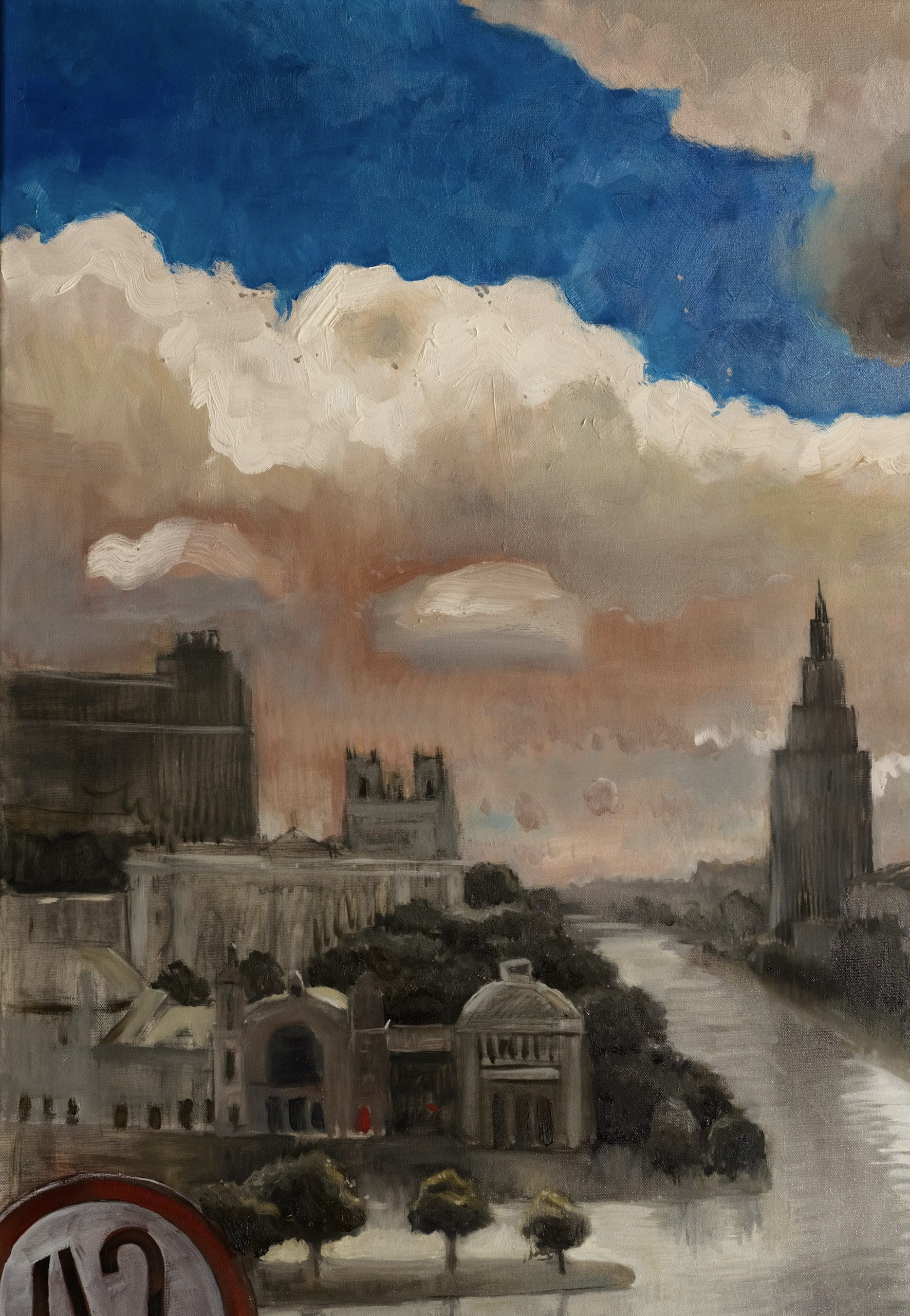
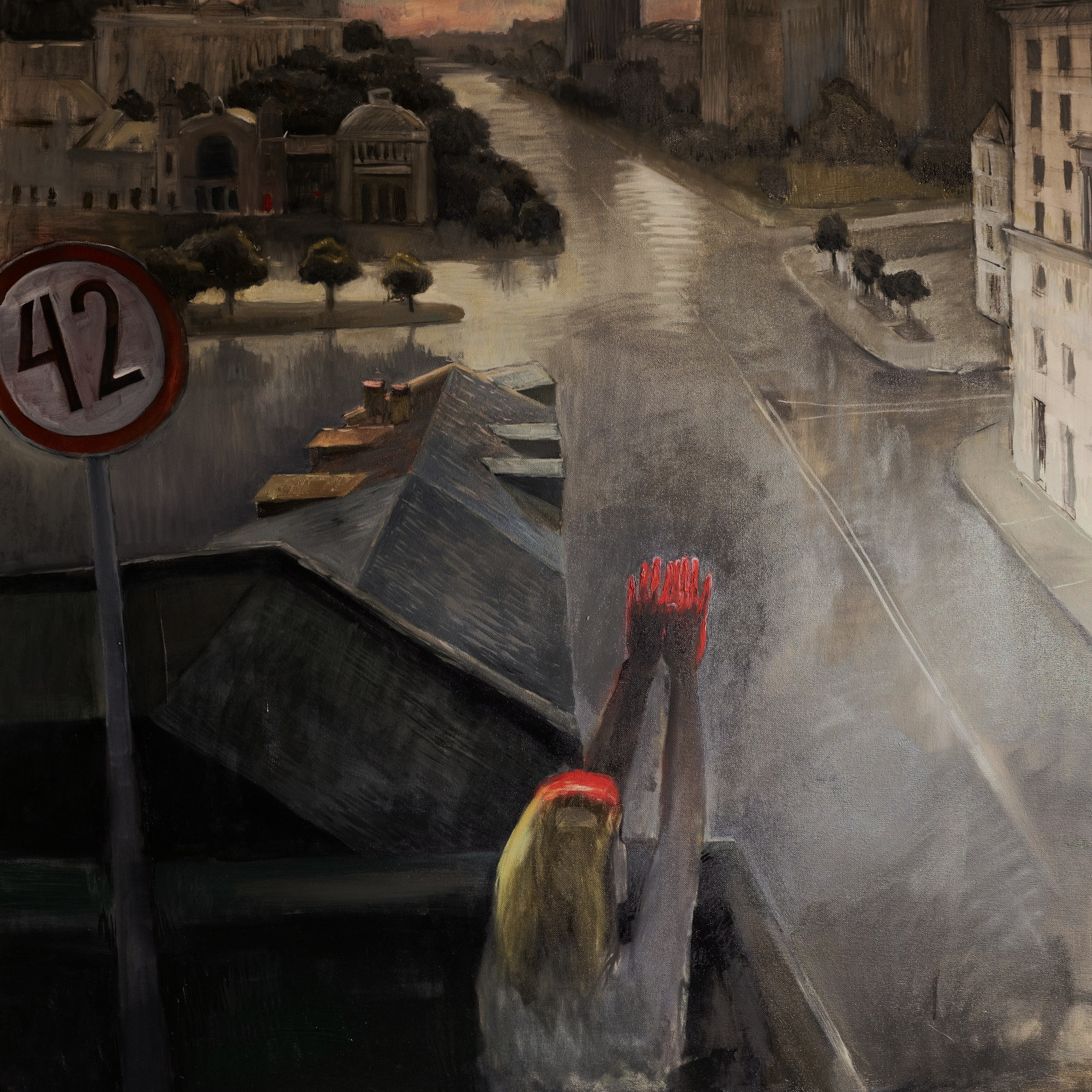
The dawn is in your hands.
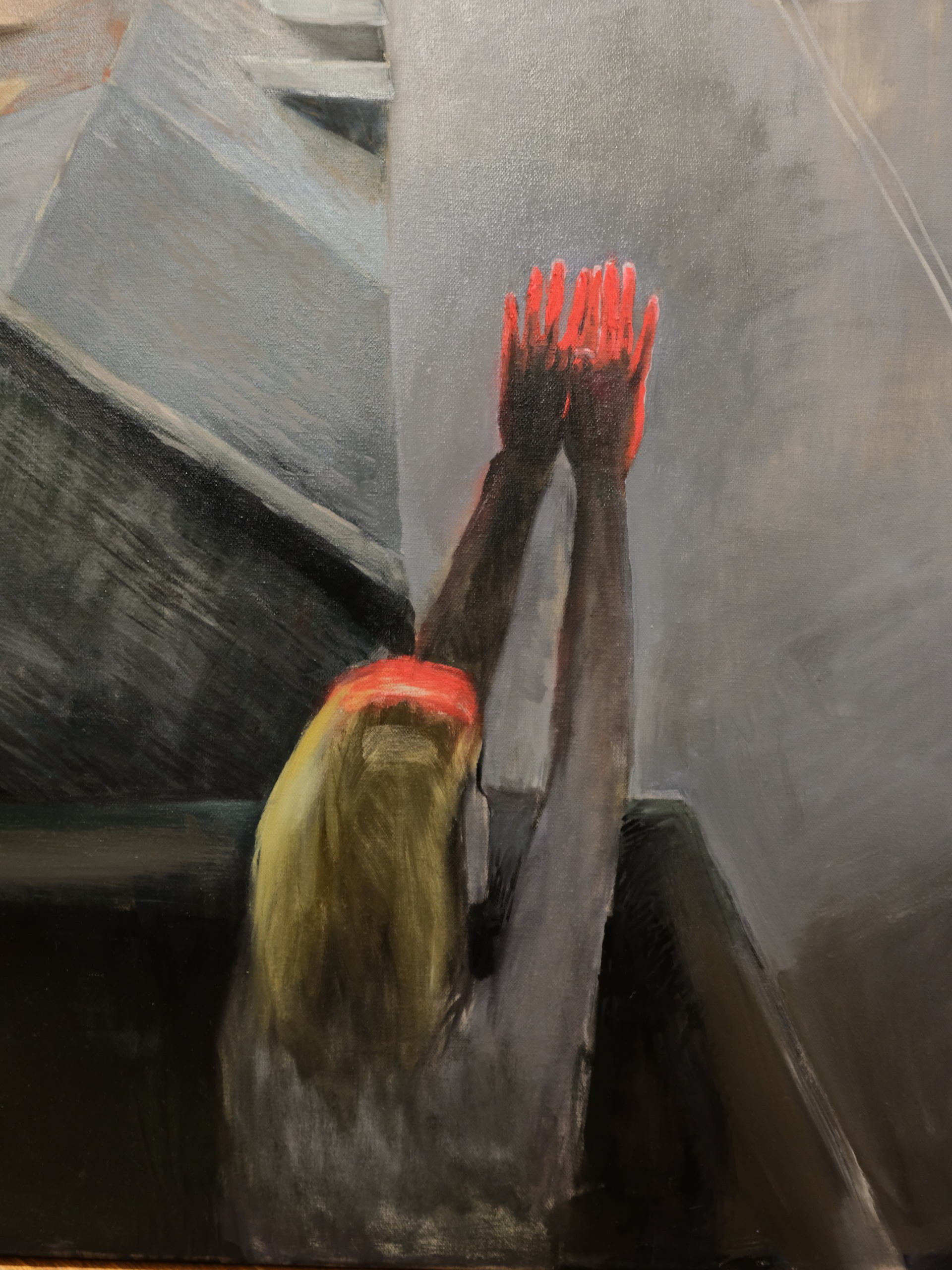
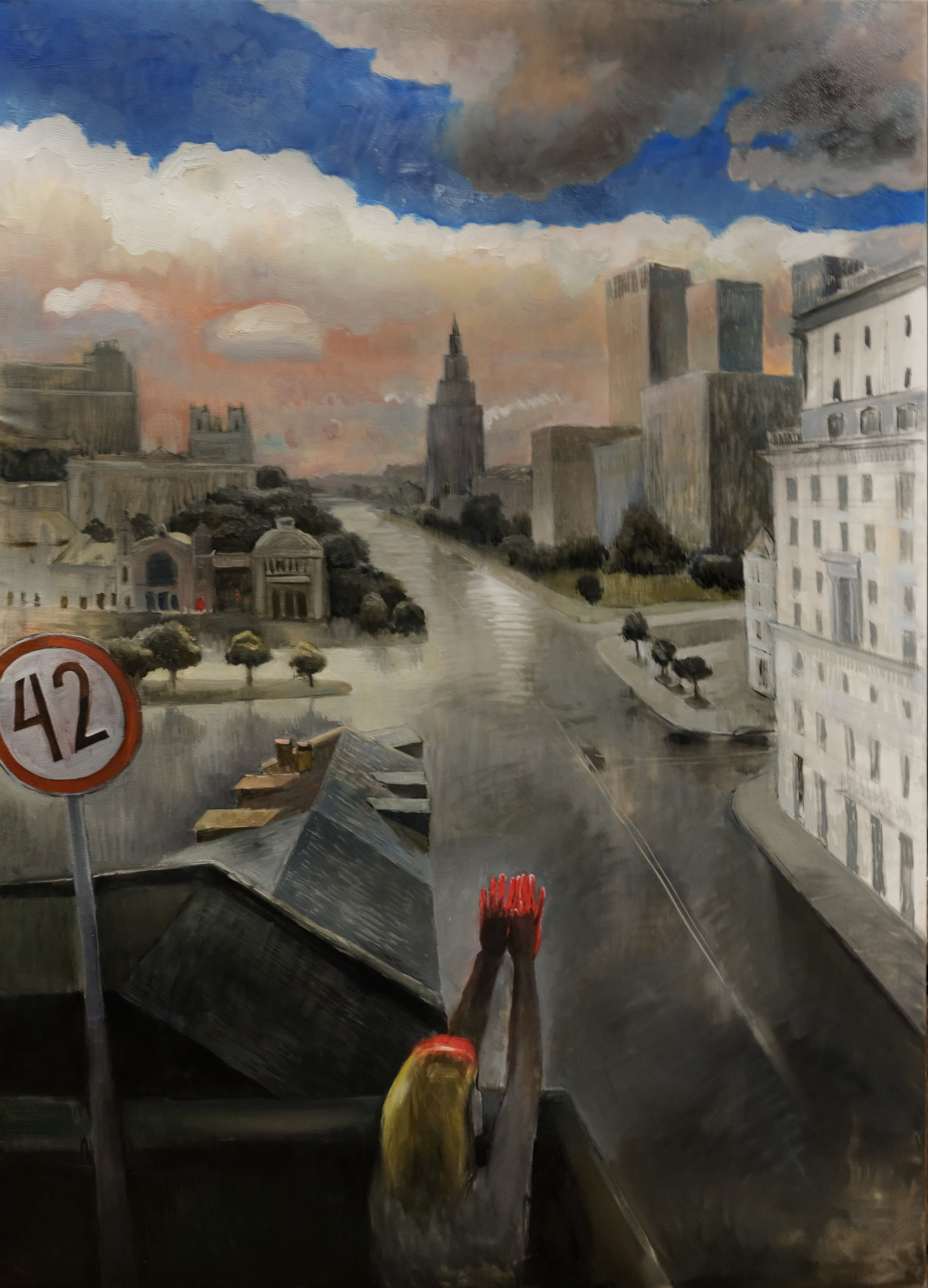
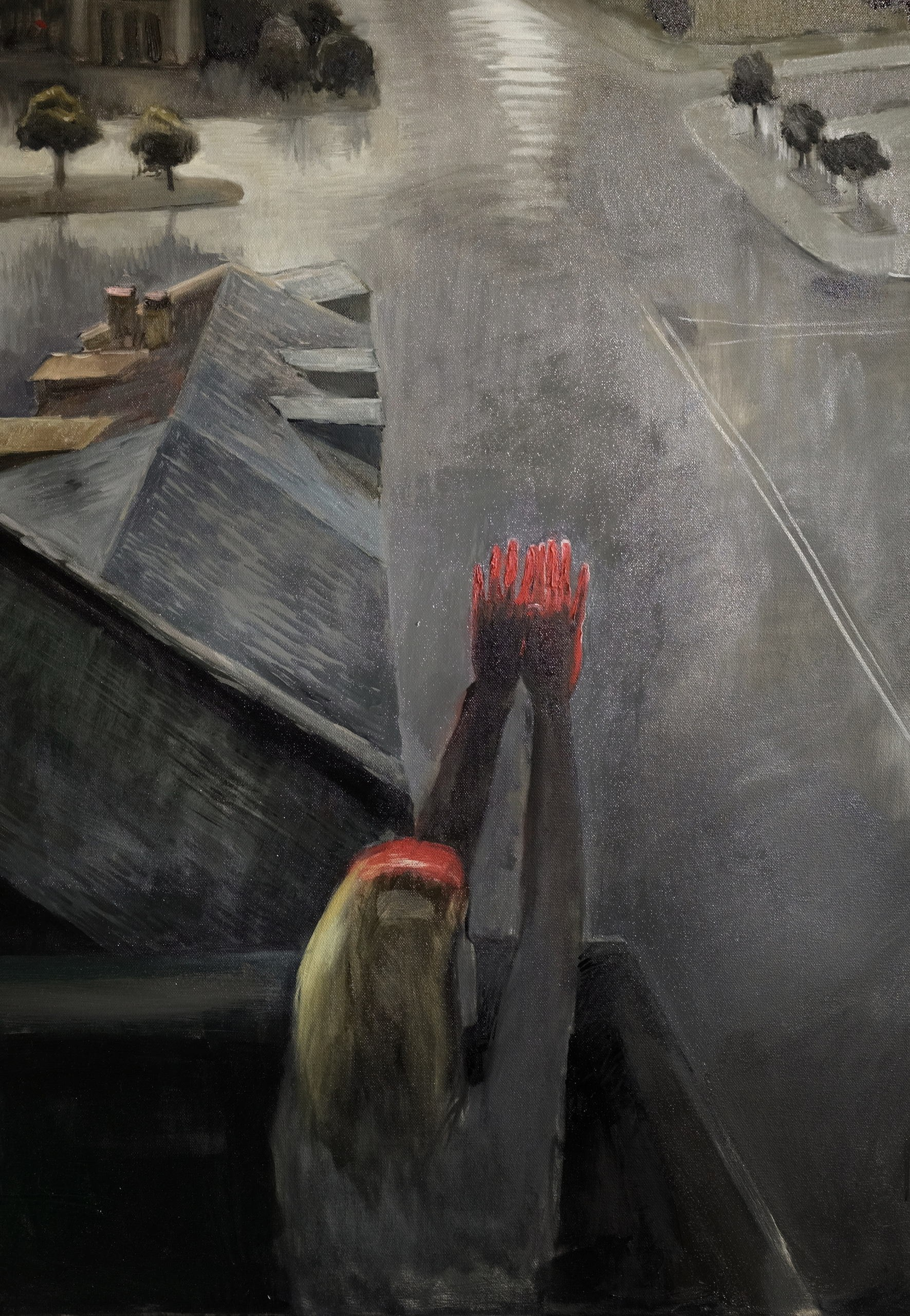
ВIn the lower part of the painting, we see the figure of a girl from behind, standing on the edge of a dark roof. This is a point of transition, a boundary. But the most important thing is her bright red hands, raised upward, as if in a gesture of creation.
The red color of the hands is a symbol of vitality, passion, and the very energy of action that the painting’s message conveys. The person is not just looking at the city; he is reaching out his hands toward the sky and the dawn, as if he is holding that dawn in his palms. This is a moment of determination: “I’m ready to change everything.”
In the foreground on the left, there’s a speed limit sign with the number “42”. This is a very interesting detail. On the one hand, it’s a reference to pop culture (the answer to the ultimate question of life); on the other hand, it’s a reminder that we too often artificially limit ourselves (“slow down”), even though we’re actually ready for more. The sign stands at the edge of darkness, from which the hero is looking out, urging him not to be afraid to step beyond the boundaries.
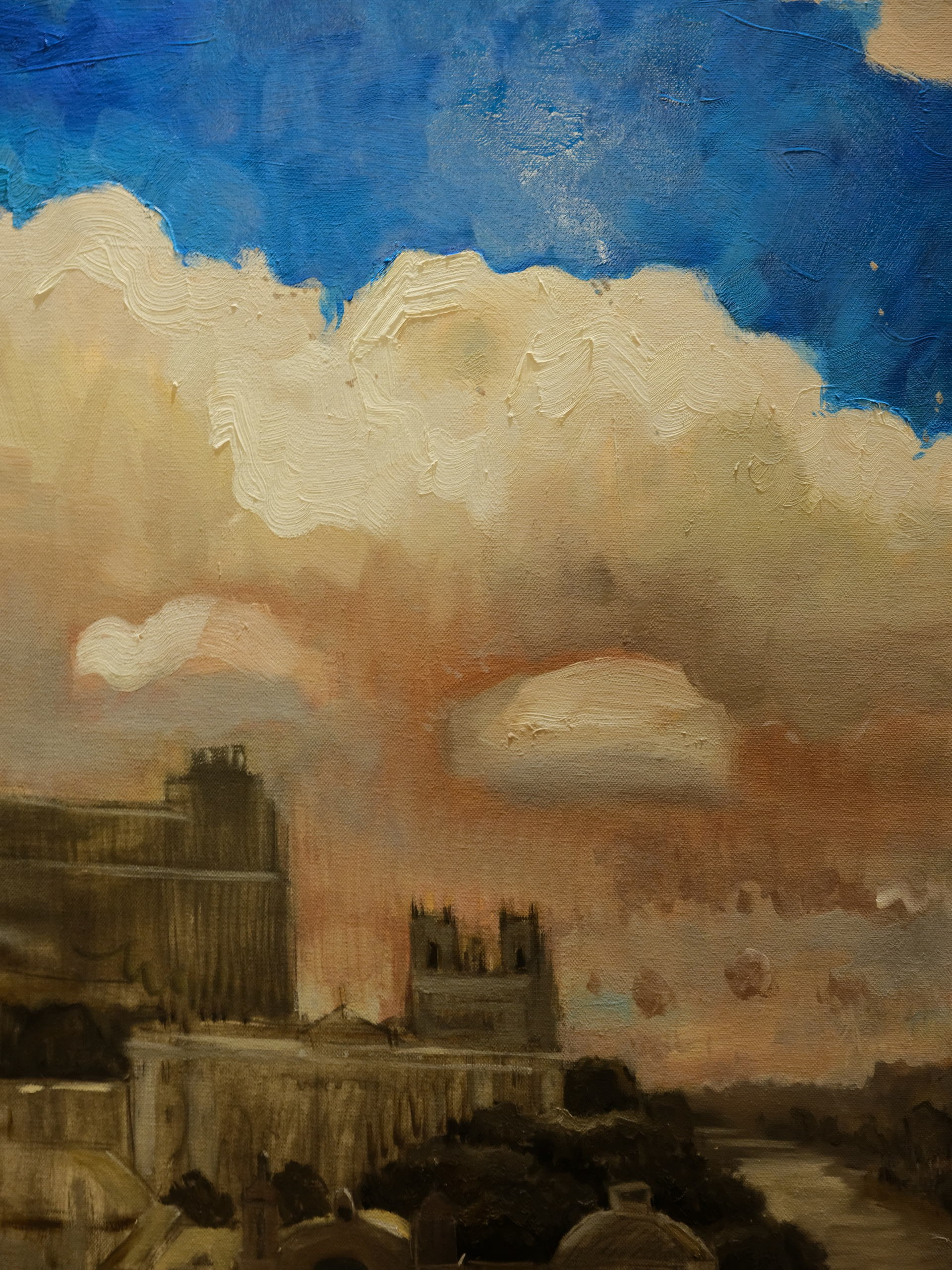
The sky is the most dynamic element of the painting. In the upper part, heavy, dark‑gray clouds are still swirling (the past, doubts, fears). But piercing‑blue azure is already breaking through them, and on the very horizon, a soft peach‑colored, golden dawn is blazing.
This dawn is the very goal. He symbolizes a new beginning, hope, and purification. The painting screams that the future is not predetermined. It won’t descend from heaven on its own. The dawn is literally “in the hands” of the person (and the viewer). The painting conveys an amazing sense of awakening and readiness to act right now.
110×160 cm, canvas, oil
About the plots
If you’d like to learn in detail about the intentions, meanings, and secret messages, write to me — I’ll respond and add a description to the website.